We analyze your market, competitors and B2B buyers, map out the business logic and design the UI/UX around your sales cycle.
At launch you get the site, a secure server and a CRM that routes every enquiry straight to your sales team.
Find your situation — it shapes the depth of research and the project format.
There is traffic, but few enquiries from businesses.
Email, messengers, calls — and nobody sees the full picture.
You need languages, local versions and the trust of foreign buyers.
They click around, look for what they need and leave without sending an enquiry.
Six stages from market analysis to launch. Each one ends with a result you see and approve.
Where you can stand out
Buyer profiles and their questions
Site goals and metrics
Sitemap and the path to an enquiry
Page wireframes before design
The site on our server, connected to the CRM
Every block on the site has a purpose: you know why it’s there and how it moves a buyer toward an enquiry.
Sites built through these stages. Each with research, a CRM and results you can see in the enquiries.
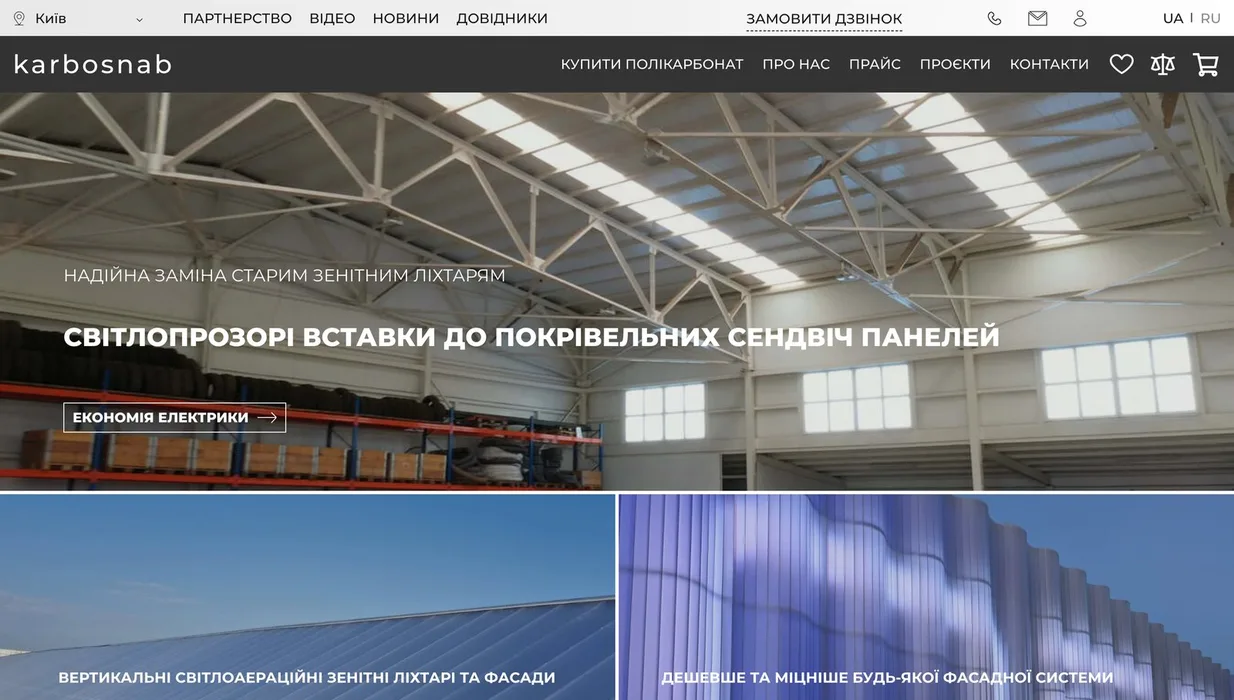
All case studies in detail: the task, the solution, the numbers.
See all case studiesYou get a working sales tool, not an archive of files: the site runs on our server, secured and monitored, and every enquiry goes straight into the CRM.
One team is responsible for everything.
We build and support the site, server and CRM ourselves, so every question is handled in one chat. After launch the site stays on monthly support: updates, security, backups, monitoring and the CRM. We tailor the support scope to the project. More about our servers
Tell us about the task — within 72 hours we’ll send a proposal with stages, timeline and cost.
Discuss your projectThe answer depends on whether the site will grow and whether it has to do more than display pages.
| Builder / CMS OpenCart · Webflow · Wix · WordPress |
Freelancer / AI | WebCode.Agency | |
|---|---|---|---|
| Competitor and audience research | — | rarely | yes |
| Business analysis and site goals | — | rarely | yes |
| Prototype before design | — | rarely | yes |
| Client login area | not possible | almost never | yes |
| Integrations: ERP, telephony, payments | limited | rarely | yes |
| Server and CRM | find separately | find separately | one ecosystem |
| Backups, 24/7 monitoring, DDoS protection | up to the platform | rarely | yes |
| Speed (PageSpeed) | 60–75 | hit or miss | 90+ |
| Code warranty | — | rarely | 6 months |
| Contract and NDA | platform terms | rarely | yes |
| Support a year later | on your own | if you can agree | us, by contract |
We choose the format together after the research stage. The cost is calculated for your task and fixed in the contract before work starts.
Portal
Client logins, roles and integrations with your systems.
Website
A multi-page company website with an admin panel, blog and forms that send enquiries to the CRM.
Custom
High load, non-standard logic, your own infrastructure.
Need a landing page rather than a website? That’s a separate service.
One page for one offer in 10 days, with an enquiry system and ad attribution.
Staged payments: you see and approve each result before the next payment.
We work officially: price and timeline are fixed in the contract, and we can sign an NDA before discussing details.
Fixes within the warranty are free. After that, the site stays on our support.
Full access to the server, site and CRM at launch. Export your data any time.
How much does a website cost and what drives the price?
We price every project individually and send a proposal within 72 hours, broken down by stage: research, prototype, design, development, server and CRM. Three things move the number: how many pages, how many systems have to talk to each other, and whether you need private sections with access rights. We fix the price in the contract before work starts.
What's the difference between a landing page and a website, and which do I need?
A landing page is one page for one offer, built for ad traffic. A website covers several services, a blog, search visibility and trust in the company as a whole. Simple rule: if you’re running ads to one specific offer, you want a landing page. If people will search for you and compare you with competitors, you want a website.
Can I change text and photos myself?
Yes — that’s the whole point of the admin panel. Text, photos, prices, blog posts: all yours to change, no developer needed. We walk you through it at handover and leave a short written guide. Changing a page’s structure or adding a new type of section is development work, billed hourly and quoted before we start.
Why research and a prototype — can't you go straight to design?
Because good design without understanding the buyer is just a nice picture. Competitor analysis shows where you can stand out, audience research shows which questions the site must answer, and a prototype lets you approve structure and logic while changes are still easy. As a result, every block on the site has a purpose, and design and development move faster with no rework.
What does turnkey mean: website, server and CRM?
You get a ready system, not just the site files. We host the site on our server with SSL, security updates, DDoS protection, daily backups and 24/7 monitoring. The forms connect to our CRM — in our cloud or on your server — so every enquiry reaches a manager right away. After launch all of this stays on monthly support, with the scope tailored to the project.
What counts as support and what counts as a paid change?
Support keeps everything already on the site running smoothly: server, security, backups, monitoring, forms, integrations and the CRM. Anything new — a page, a section, a structural change — is development work: we estimate it in hours and agree the quote up front.
What technologies do you build websites on?
Company websites run on our own platform, proven on dozens of projects: a fast launch with no third-party platform licenses, so the budget goes into design, content and the features you need. Portals, login areas and custom logic are built for the task with React, Next.js, Vue.js, Nuxt, Node.js, Laravel and Python, on PostgreSQL, MySQL and Redis databases, in Docker containers. Other technologies are chosen to fit the project. The stack is open and widely used, so any team can pick the project up.
Who owns the site and the data?
The data is entirely yours: enquiries and contacts export to CSV any time. You get the site along with full server and admin access, and any developer can maintain or extend it. Our own building blocks — the templates and modules we also use for other clients — stay ours, but that never limits what you do with your site.
Can you migrate my site off Tilda without losing rankings?
Yes, it’s a separate module. We move the content, map every old URL to its new address with 301 redirects, and keep titles, descriptions and structured data intact. Rankings usually wobble for two to three weeks after a migration and then settle — we monitor them through that window.
What do you need from me, and how much of my time?
Copy, photos and a logo. Time-wise: an hour for the brief, an hour or two reviewing the design, and an hour of training at handover. Everything else runs without you. No copy yet? We’ll write it — that’s a separate module. We ask about it up front on purpose: copy is the most common reason projects pause for two weeks.
Describe the task in a few sentences — that’s enough to start. We can sign an NDA before discussing details.
We use your data only to reply to your request. Privacy policy